
Africa

The REAL Dar Es Salaam: Afri Roots Bike Tour

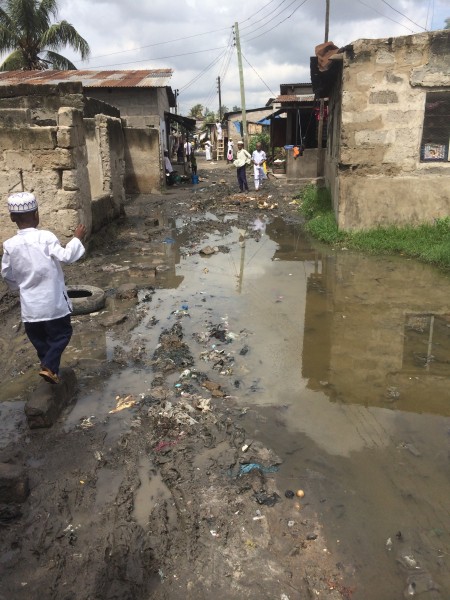
When it rains, the neighborhood pictured above and the houses within have the potential to flood.  Standing water can cause many issues, including attracting pesky and sometimes malaria-carrying mosquitoes.  Thus, the population living in this area has a high chance of becoming infected with malaria and cholera (which is caused by drinking water or eating food contaminated by feces).  This picture is just one of the many harsh realities that I was faced with during my bike tour on Saturday.  By the way, it only rained for a few hours Friday night.  Can you imagine how this road will look during the rainy season when it rains all day for months?

A colleague recommended the Afri Roots Bike Tour as a way to see the city in a different way. According to their website:

Beyond the city center, peninsula and highways there is another face of Dar es Salaam – back roads with vibrant community and street life keeping the city in motion. This tour takes you to the “real” Dar es Salaam accessible by bike or on foot.

Gain first hand experience of the social issues facing Dar es Salaam – living conditions of families, rapid urbanization, infrastructure issues and the urban environment. You will visit markets and meet the people who work and innovate in the informal economy, and hear about the struggles they face.

I must admit, I didn’t really think the tour would show me anything that I hadn’t already seen. But I was completely and ignorantly wrong.  Let me try to paint a picture for you.  Dar es Salaam is divided into three districts: Ilala, Kinondoni, and Temeke.  Ilala and Temeke are where the lower and middle class populations live, while Kinondoni is more of a wealthy area.  It is where most ex-pats and other foreign diplomats reside because it has a peninsula, which means there’s beachfront property.  While it may seem like the districts are far apart, they are actually only within 10 minutes of each other.  I had no idea what has literally been down the street from me for the past month.  I could go on, but I think it’s better you see for yourself.
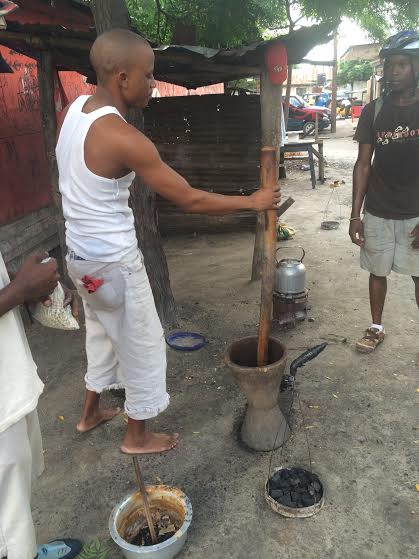
Our guide explained to us that in the 1960’s, many people came to Dar es Salaam from more rural areas such as Arusha and Morogoro to find work.  Due to the city’s overcrowding, however, the Tanzanian government made people return home unless they could prove they were employed.  People got creative and started making coffee to sell on the street.  One of the first stops on the tour was visiting a man making coffee from scratch.  In the picture below, he is grinding the coffee beans in a traditional mortar and pestle (a typical gift given to a woman before she is married).  If grinding quickly and steadily, it takes about 30 minutes for the beans to be ground fine enough for water to be added…no cream or sugar necessary.  You are supposed to drink the coffee with a homemade peanut brittle, giving the coffee a sweeter taste.  I don’t like black coffee, but it was surprisingly delicious.  Starbucks could learn a lesson or two.

Me grinding coffee like a typical Tanzanian woman. Ha!

Me grinding coffee like a typical Tanzanian woman. Ha!

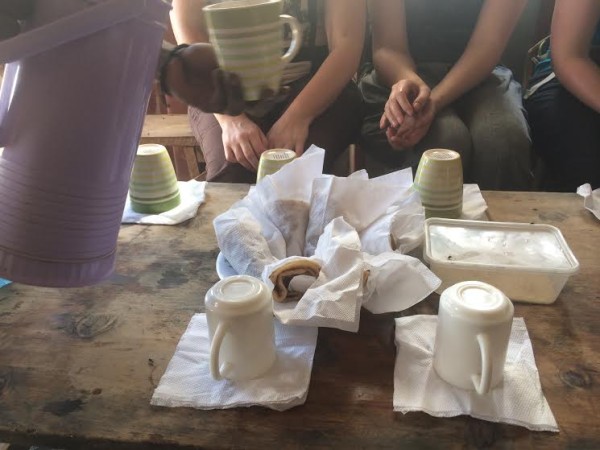
The next stop on our tour was visiting Mama Amina (mother of Amina, her first born daughter), who was making fresh chapati.  Chapati is similar to Mediterranean roti.  Water is added to wheat, which makes dough.  Then the dough is kneaded and fried in a pan with cooking oil.  We were also served Tanzanian tea to accompany our fresh chapati.
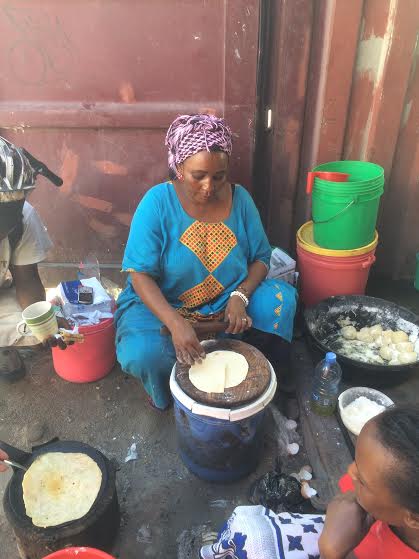
Mama Amina making chapati
Mama Amina making chapati

Tea and chapati being served

Tea and chapati being served

Around the corner from Mama Amina lived Mama Yasmin.  She is from a tribe in Tanzania (I forget the name) where the women own the property.  She was born in this house and it was passed down to her by her father.
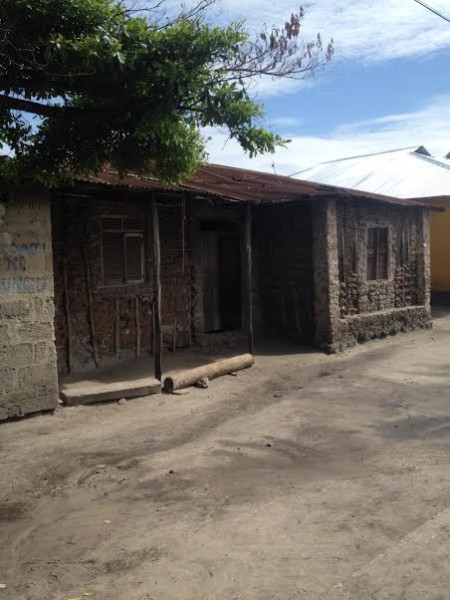
Swahili Home

Swahili Home

This is a typical “Swahili culture house.”  It is sectioned off into 6 bedrooms with one main hallway.  The rooms are very small, but an entire family can live in one room.  Mama Yasmin rents out some of the rooms in her home.
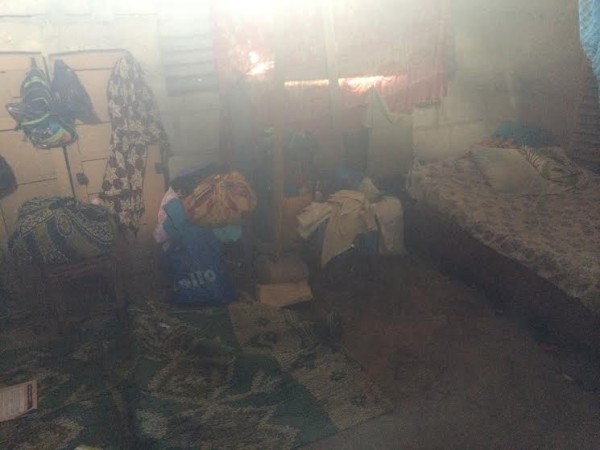
The picture above is a tad blurry, but an entire family of 8 lives in this one room.  Below is a poster on the wall in the room that says, “Love is Love.”  Our guide explained that one of the important aspects of Swahili culture is loving yourself, your family and your neighbors.  While they may not have a lot, love is very important to them.

As we continued on the tour, we ended up in the lowest neighborhood in the city.  As I mentioned above, the area floods during heavy rain.  There is a river that flows through the neighborhood that originates in a wealthier part of the city.  The river flows down into this neighborhood and because it stops here, the stagnant water is polluted and attracts mosquitoes, as well as causing other health-related problems.  We continued our tour and ended up in a neighborhood that was preparing for a celebration.

Baby Mohammed was turning 40 days old.  In Muslim culture, babies are not allowed to leave the house until the 40th day after birth.  Lucky for us, we were able to help celebrate Mohammed’s 40th day alive.
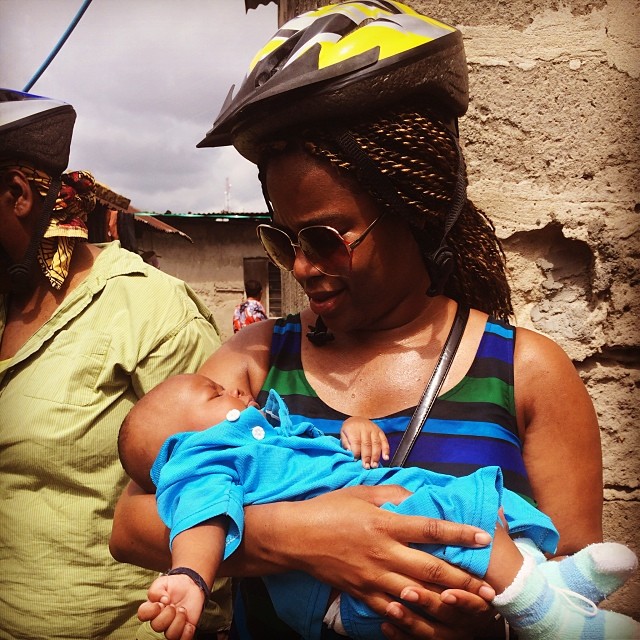
Baby Mohammed’s grandmother was the town’s herbalist.  She showed us her garden, where she grows basil, mint and other herbs that are supposed to cure illnesses such as malaria, epilepsy and yellow fever.
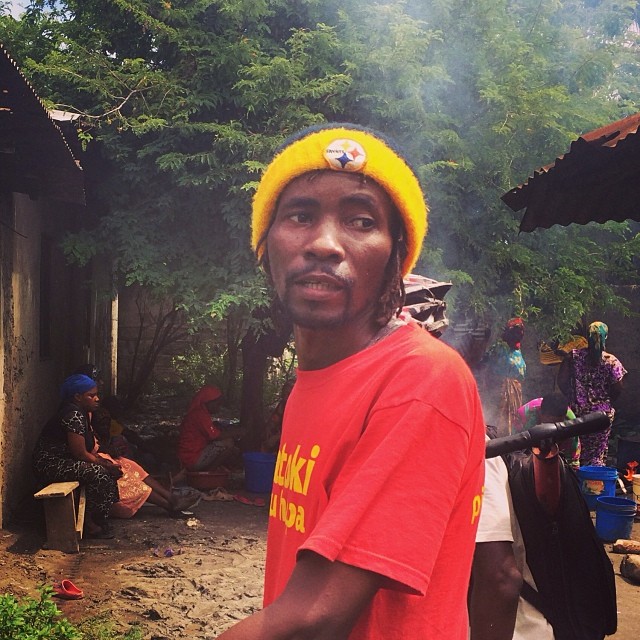
Found this man wearing a Steerlers hat. While he didn’t understand what I was saying, I let him know he was reppin’ the wrong team. Go RAVENS!

Found this man wearing a Steerlers hat. While he didn’t understand what I was saying, I let him know he was reppin’ the wrong team. Go RAVENS!

As we continued the tour, we ended up in a kanga shop.  Remember I talked about kitenge and kanga?  (If not, read here)  I learned that the sayings on kanga are written to be subliminal messages.  If a woman has a problem with another woman, she will go to the store looking for a kanga with a specific message.  She wears the kanga in front of her adversary to get her point across.  Talk about passive aggressive!

We also stumbled upon a “ghetto movie theater” (their words, not mine).  If there is a special event on TV, the neighborhood will gather here to watch if the electricity is working. Next, we ended up in one of the city’s larger markets.  People go here to buy anything from food and clothing to toiletries and children’s toys.

Three days later, I am still trying to digest everything that I experienced during the bike tour.  I’m so glad I was able to see how some people in Dar es Salaam live.  While the conditions are not the greatest, everyone we encountered were friendly and welcoming.  Mama Yasmin told us that if we’re ever in Dar without a place to stay, come find her and she will make room for us. You won’t find that kind of hospitality everywhere.
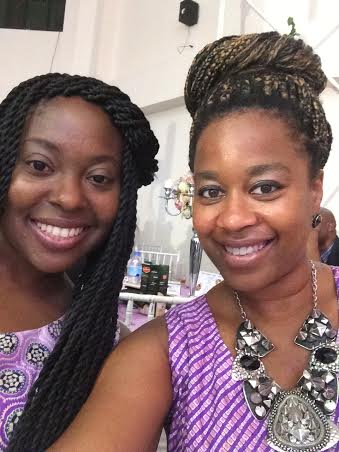
A Tanzanian Wedding Story: 2 Confused Americans and 1 Happy Couple

Remember that time you were a guest in a room of 150 Tanzanian strangers and during the course of ceremonies only spoken in Swahili, you were introduced as the “American sister” in the room and asked to stand for acknowledgement?  That actually happened to me…TWICE.


My coworker, Martha*, graciously invited my other coworker, Christie, and I to her 25 year old son’s wedding.  Super nice, right?  She said she wanted Christie and me to experience some of the Tanzanian wedding culture.  She even took us to Kariakoo Market to buy kitenge (read about that here) in the colors of the wedding, which is a tradition that Tanzanians try follow if they have the wedding colors in their closet.  Because I didn’t pack an appropriate wedding dress for my 2-month stay (Seriously, next time I come to Africa, I will definitely be bringing at least one fancy dress…I’ve needed one TWICE since I’ve been here!), we happily bought lavender and white kitenge and took it to our local tailor to have custom dresses made.  As a side note, buying fabric and designing my own dress was fantastic.  Why don’t I do that more at home?

Before the wedding, Martha said it was customary to give a gift of 50,000 tshs (about $30) before the wedding, if you were able.  I think it’s interesting gifts are given before instead of after the wedding.  The week of the wedding, Martha invited us to a “send off” ceremony for the bride.  What is a send off, you ask?  In a nutshell, a send off is a party thrown by the bride’s family to give her away to the soon-to-be husband’s family.  The husband’s family comes, bearing gifts to give to the bride’s family in exchange for the bride.  Martha explained that in the olden days when a woman was to be married, her husband’s family lived in a far away village most times.  After the wedding, the bride would most likely never see her family again.  This party is a way to say goodbye and send her off in style.  Since advanced technology and transportation have allowed people to remain more closely connected, that isn’t necessarily the case anymore, but the tradition still remains.

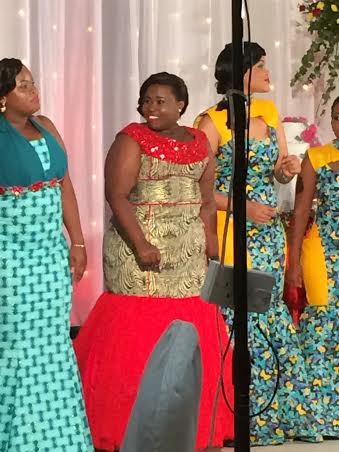
Martha picked us up for the send off ceremony wearing a fancy banquet dresses that I just knew was the fanciest dress she owned.  In that moment, I didn’t want to go anymore.  Who likes showing up to a party in the wrong attire?! Feeling underdressed in my maxi dress, I reluctantly continued on to the party, kicking myself for not bringing a fancier dress to Tanzania.  Once we arrived at the banquet hall, we learned that the groom’s family had to wait outside to be invited in by the bride’s family.  We stood outside for about an hour waiting for the party to start, and then to be invited in.  Once they were ready for us, the family gathered up the gifts and danced into the banquet hall.  They (and us) shook the hand of each of the bride’s family members waiting in the reception line.  We sat our things down and were shown the way back to the dance floor.  We (the groom’s family) danced in a circle to an upbeat Swahili wedding song and then sat down.  Following us, the bride and her bridesmaids entered the hall, dancing to Pharrell’s acclaimed song, “Happy”.  The bride took to the mic and introduced her family, bridesmaids, friends and other important guests.  Then it was the groom’s family’s turn to make introductions. Keep in mind, all of this is happening in Swahili, so I really had no idea what’s being said.  Luckily, a woman who spoke great English ended up sitting next to us and told us what was happening at each juncture.  A complete Godsend.  Otherwise, I would have been clapping on cue like a circus monkey when I heard the room erupt in applause.

Bride at Send Off Ceremony

Bride at Send Off Ceremony

A spokesman from the groom’s family began making introductions.  He introduced the groom’s parents, his siblings, extended family members, friends, and neighbors (yes, even the neighbors).  The next thing I see is Martha’s husband getting up to talk to the family spokesman.  He looks at us and starts pointing in our direction.  All I could think was “NOOOOO!”  The spokesman began speaking in Swahili and then our translator says, “He’s talking about you; he’s telling you to stand up.”  I wanted to faint.  By all accounts, people believed we were fellow Tanzanians.  Before the ceremony started, some people actually tried talking to us, but we had to kindly let them know that we didn’t speak Swahili.  Darn.  We stood up and received the room’s applause.  I felt outed.  It’s not that anyone made me feel uncomfortable, but I definitely didn’t feel like we were able to blend in anymore (as much as our Western clothing allowed us to).  Maybe I was being self-conscious, but I felt like people were studying our clothes, our hair, and our actions.  It’s such a strange feeling being in a room full of people who look like you, but you don’t speak the same language

After our introduction, the bridesmaids got up again to pop the champagne bottles and went around the room pouring it into each guest’s glass.  The bride gave a small cake to her family, another cake to the groom’s family, a third to her extended family and a final cake to her bridesmaids.  The bride’s guests then got up to dance.  Imagine my surprise when they do what looks like the Electric Slide.  Finally…something I recognized!  My neighbor translator actually said the dance was called the “Kwaito” but I didn’t care what she said, it was the Electric Slide to me.  Who knew it was known by Black people worldwide?  Ha.  After dancing, the bride went to her parents and asked for permission to marry her groom.  In Tanzanian culture however, it is up to the bride’s brother to grant permission.  The bride and her brother had an intimate, tearful moment as he agreed to allow her to marry her groom.  By this time it was 10 p.m., 3 hours after we arrived.  Talk about long!  My attention span was waning…and they still hadn’t served the food!  I had to go.  With the next work day looming, and no end to festivities in sight, we decided to exit as they began food service.  We later learned that the food is served near the end so people will stay…oh the trickery.

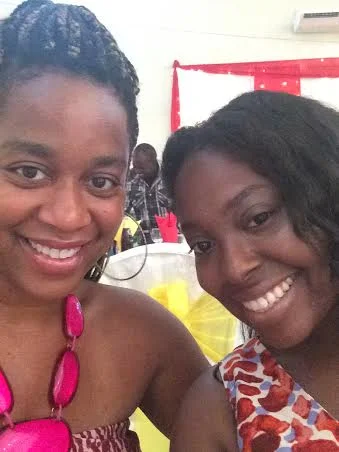
At the Send Off Ceremony

At the Send Off Ceremony

Because the actual wedding was in a town far from the reception hall and where we live, we decided to forgo the wedding and only attend the reception.  Much of the reception followed the same format as the send off ceremony.  Tons of respect is given to extended family, neighbors and friends.  There’s even a committee for the wedding reception, which is comprised of family and friends who help to organize the event.  One notable tradition is that each table had their own individual cake. Before dinner is served, someone at the table is chosen to cut the cake.  Christie was our table’s cake rep and she cut it like a pro!  The cake is then passed around the table for small pieces to be eaten.  There were many more toasts, introductions and lengthy pomp and circumstance.  We were introduced as “American sisters” AGAIN, and it was less mortifying this time but still a little intimidating.  After dinner, we thanked Martha for the invite, called our taxi driver and made our exit.

Christie cutting the cake

Christie cutting the cake

It was such a great experience to witness the wedding (reception) in a different country and culture.  I should also mention that in addition to the wedding and send off party, the bride has a ‘kitchen party’ where she receives gifts for the home, and the groom has a party to receive ‘manly’ gifts.  All of these parties sounds like getting married can be expensive for the families!  But one thing that remains the same across cultures is that the couple seemed happy and the families looked proud.  Thanks for the invite, Martha!  Check out more pictures below.

*Name changed to protect her anonymity

Kufurahia! (Enjoy!)

Ashlee

Photo Credit: Ashlee Tuck